Celebrating the Spirit of the Creator’s Game: The Indigenous Roots and Olympic Future of Lacrosse
In 2028, lacrosse returns to the Olympics, a momentous event for sports enthusiasts and Indigenous communities. This article explores lacrosse's Indigenous roots, its journey to the modern era, and its cultural significance.
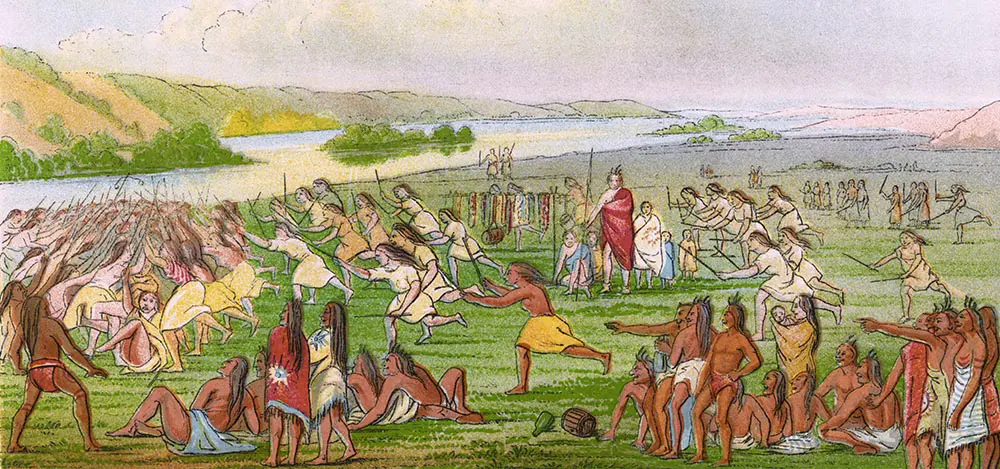
Vintage Illustration of Indigenous Lacrosse - Circa 1830
The Sacred Origins of Lacrosse
The story of lacrosse is not one that begins in the modern sports arenas of the 20th century, but rather in the sacred traditions of the Indigenous peoples of North America. Known traditionally as Baggataway or Tewaaraton, lacrosse was not just a game for tribes such as the Haudenosaunee, Anishinaabe, and many others across the continent. It was a spiritual practice, a means of conflict resolution, a tool for healing, and a method for cultivating strong, agile warriors.
As noted by Seth Wolpowitz and Marcus Peng, “Most Indigenous nations believe that the game of lacrosse is a gift from the Creator,” highlighting its esteemed origin. This deep respect for lacrosse as a divine gift permeates its practice, rendering it a ritualistic expression of gratitude to higher powers, where players engage in a symbolic battle on the field as an act of honor and prayer.
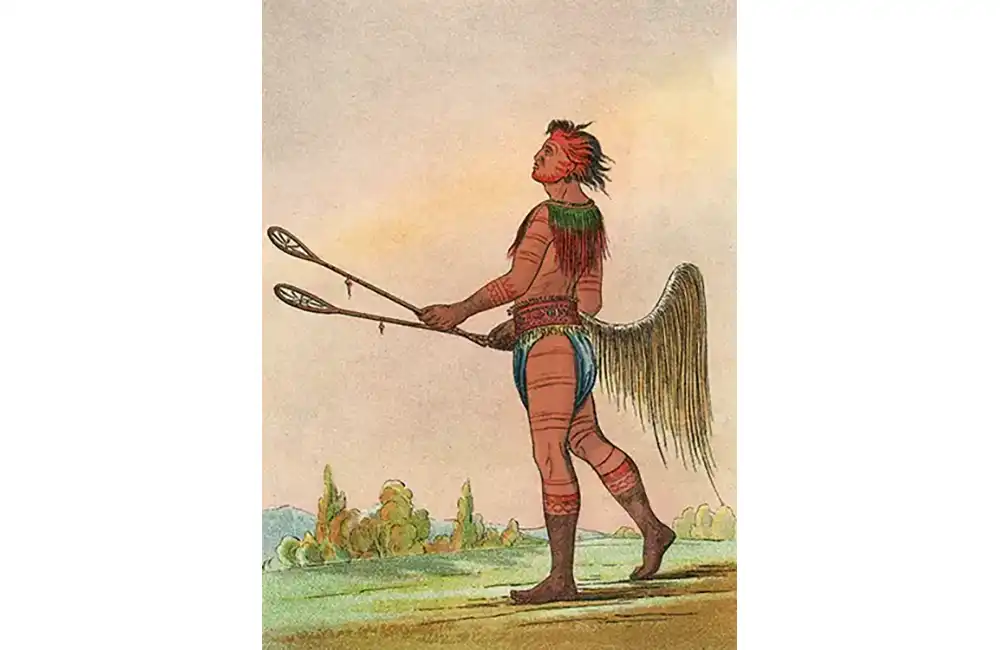
Vintage Illustration of Choctaw Lacross Player - Circa 1830
Lacrosse Through the Ages: Adaptations and Challenges
The lacrosse journey from tribal fields to international stadiums is a testament to its resilience and adaptability. In the 17th century, European settlers encountered the game, captivated by its agility and complexity. As detailed in historical accounts from World Lacrosse, the sport was formalized by Canadian dentist William George Beers in the 1860s, who founded the Montreal Lacrosse Club. Beers introduced significant changes, such as reducing the number of players and standardizing equipment, which helped transform lacrosse into a structured sport.
Yet, these adaptations also marked the beginning of lacrosse’s departure from its Indigenous roots. The changes that allowed its entry into European and later global sports arenas came at the expense of its cultural essence and accessibility to its original players. As lacrosse’s popularity grew, particularly in Canada and the United States, Indigenous teams often found themselves on the sidelines or marginalized due to the increasing commercialization and regulation of the sport.
Lacrosse at the Olympics: A Stage for Cultural Recognition
The inclusion of lacrosse in the 2028 Los Angeles Olympic Games is viewed as a promising opportunity for cultural recognition and revival. The Haudenosaunee, in particular, have expressed their desire to compete under their own flag, a request that is being navigated through ongoing discussions about how athletes from the Haudenosaunee could be included in the U.S. or Canadian teams. This compromise is anticipated to honor the sport’s Indigenous heritage, offering a beacon of hope for its cultural recognition.
The Olympic stage offers a unique platform to showcase the rich traditions of lacrosse and reaffirm its significance as a spiritual and community-focused activity. As Leo Nolan suggests, it is a chance to “share, more and more, about who we are and what we’re all about” on the world’s biggest sporting stage.
Languages 4 and Lacrosse: Educational Opportunities
Integrating lacrosse into the Languages 4 educational framework presents a unique opportunity to blend athletic skills with cultural education. By developing modules that delve into the linguistic and historical significance of lacrosse alongside practical playing skills, Languages 4 can provide a comprehensive learning experience that respects and celebrates its Indigenous origins. This approach not only educates but also fosters a deep respect and appreciation for the cultural dimensions of Indigenous sports.
These lessons could cover the sport’s terminology in different Indigenous languages, the spiritual beliefs associated with the game, and the historical evolution of lacrosse from a tribal activity to a modern sport. Such an approach educates and instills a deep respect and appreciation for the cultural dimensions of Indigenous sports.
Conclusion
As lacrosse prepares for its Olympic return, it carries with it the hopes and pride of many Indigenous communities. It embodies a history rich in cultural significance, a symbol of tradition and unity that has survived centuries of change. Recognizing and respecting its Indigenous roots at the Olympic Games could foster a broader appreciation for cultural diversity in sports, echoing the spirit of unity and competition that the Creator’s game has always intended to inspire. In celebrating lacrosse, we celebrate not just a sport but a living heritage that continues to teach us about respect, resilience, and reconciliation.
Pells, Eddie. “Lacrosse at the Olympics gives Indigenous communities a chance to see their sport shine.” AP News. https://apnews.com/article/lacrosse-olympics-haudenosaunee-c9c7a18770d50e0b7105db4fe8520c21.
World Lacrosse. “Origin and History of Lacrosse.” World Lacrosse Sport. https://worldlacrosse.sport/the-game/origin-history/.
Wolpowitz, Seth and Peng, Marcus. “The Indigenous history of Lacrosse.” ShowcaseSports, November 21, 2023. https://showcasesports.com/the-indigenous-history-of-lacrosse.
Connect With Us
Follow our journey, share your thoughts, and participate in the conversation. Let’s keep languages vibrant together.
Languages 4™ is more than a tool; it’s a partner in the mission of preserving and revitalizing Indigenous languages. We invite reach out to us explore how our platform can support your language teaching goals. [Join the Conversation 📩 Subscribe to our Newsletter ] and take a step towards sustaining the rich heritage of Indigenous languages.
Tagged:
By Tim O'Hagan
Related Articles

The Language of Well-being: Exploring Mental Health Benefits of Indigenous Language Revitalization
This article explores how Indigenous language revitalization strengthens cultural identity and improves mental health and well-being, focusing on the transformative power of reclaiming native languages.
Breathing Life into Language: The Heartbeat of Culture in Curriculum
This article explores the deep connection between language and culture in Indigenous language revitalization and how culturally integrated curricula foster stronger emotional bonds with language learning.

Restoring Reciprocity in Hawaiian Fishing Practices
This article explores how the traditional fishing practices of native Hawaiian communities in Ha'ena, Kaua'i, are being protected and maintained, bridging past and present to nourish future generations.